
How to Choose Remineralizing Gum: Ingredients, Benefits and Buying Tips
Remineralizing gum comes in different formulations, flavours, and package sizes. Learn how to compare ingredients, understand product claims, evaluate value, and choose an option that fits your oral-care routine.
Chewing gum is often purchased for its flavour, convenience, or ability to freshen breath. Some newer products are marketed for additional oral-care purposes, including supporting the mineral balance of tooth enamel.
These products are commonly described as remineralizing gum. They may contain ingredients such as hydroxyapatite, xylitol, and calcium compounds.
However, choosing a product involves more than reading a label that promises stronger teeth. It is important to understand what the ingredients are intended to do, what evidence supports the claims, and how the product fits into an established oral-hygiene routine.
This guide explains how to choose remineralizing gum and what to consider before purchasing.
1. Understand What Remineralizing Gum Is
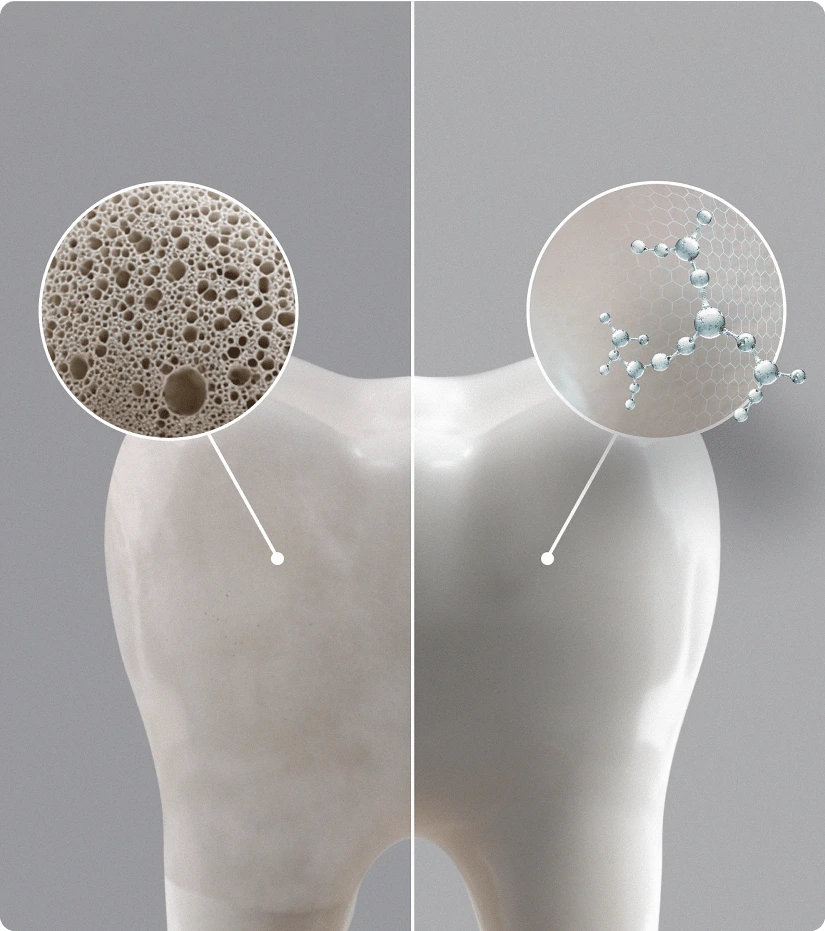
Tooth enamel is the hard outer layer of a tooth. Minerals can be lost from enamel during acid exposure, and saliva helps support the natural remineralization process.
Remineralizing gum is marketed as a way to support this process while chewing.
Depending on the formulation, these products may combine chewing-induced saliva production with ingredients intended to contribute minerals or support the oral environment.
However, the term "remineralizing gum" does not guarantee a particular clinical outcome. Products differ in their formulations, and evidence for an individual ingredient cannot automatically be applied to every finished product.
Before buying, look at the actual ingredients and the evidence supporting the claims made about them.
2. Compare the Main Ingredients
Ingredient information is one of the most useful tools when comparing oral-care gum.
Nano-Hydroxyapatite
Hydroxyapatite is a calcium-phosphate mineral associated with the structure of teeth and bones.
Nano-hydroxyapatite refers to hydroxyapatite formulated at a nanoscale. It is used in some oral-care products intended to support enamel.
When comparing products, check whether the ingredient is listed clearly and whether the manufacturer provides useful information about its formulation.
Do not assume that a product containing nano-hydroxyapatite will necessarily repair a cavity or restore enamel that has been physically lost.
Xylitol
Xylitol is a sugar alcohol used as a sweetener in many sugar-free products.
Chewing sugar-free gum can stimulate saliva production, and xylitol is commonly used in oral-care formulations.
However, the overall effect depends on the product, usage, and individual circumstances. Check the ingredient list if you have dietary restrictions or digestive sensitivity to sugar alcohols.
Calcium and Phosphate Ingredients
Some formulations include additional calcium or phosphate compounds.
These ingredients may be included to support the product's remineralization concept, but their presence alone does not establish how much benefit the finished product will provide.
Compare the available formulation information rather than assuming that more ingredients necessarily mean better results.
Other Supporting Ingredients
Products may contain minerals, flavourings, sweeteners, or ingredients intended to support the oral environment.
Read the complete ingredient list, particularly if you have allergies, sensitivities, or preferences regarding specific sweeteners and flavouring agents.
3. Check the Gum Base
The gum base affects texture, chewability, and the materials used in the product.
Conventional chewing gums may use synthetic gum-base ingredients. Some newer brands advertise alternatives based on natural chicle, a material derived from tree sap.
If the composition of the gum base matters to you, check whether the manufacturer identifies the material clearly.
Terms such as "natural" or "plastic-free" should be evaluated against the manufacturer's ingredient information and supporting documentation.
Do not assume that a natural gum base automatically provides superior dental benefits. Gum-base composition and oral-care effectiveness are separate considerations.
4. Look Beyond Marketing Claims
Packaging and product pages often use terms such as "strengthens enamel," "supports remineralization," or "helps protect teeth."
These claims should be considered carefully.
Look for Specific Explanations
A useful product description should explain which ingredients are included and what role they are intended to perform.
Vague claims without ingredient details make it harder to compare products.
Distinguish Ingredient Research from Product Research
An ingredient may have been studied in one type of oral-care product without the same evidence existing for chewing gum.
The method of delivery, ingredient concentration, contact time, and complete formulation may differ.
Therefore, evidence for a toothpaste, mouth rinse, or laboratory ingredient cannot automatically establish the effectiveness of a gum containing a related ingredient.
Treat Testimonials as Personal Accounts
Customer reviews can help you understand flavour, texture, packaging, and convenience.
They cannot independently demonstrate that a product prevents cavities, treats tooth sensitivity, or repairs enamel.
For clinical questions, look for relevant research and consult a qualified dental professional.
5. Consider Flavour and Texture
A product's flavour and texture can affect whether you enjoy using it.
Some people prefer a strong mint flavour, while others favour fruit flavours or a milder taste.
Texture can also differ between formulations. A firmer gum may feel different from a softer conventional gum, and the flavour may last for different amounts of time.
When comparing products, read reviews for specific observations about:
Flavour strength.
How long the flavour lasts.
Chewing texture.
Whether the gum becomes softer during use.
Packaging convenience.
Overall cost.
These are subjective factors, so another person's favourite flavour may not be your preference.
6. Compare Package Size and Cost Per Piece
A product's total price does not always reveal its value.
A larger package may cost more upfront but offer a lower price per piece.
To compare options, divide the total product price by the number of pieces included.
For example, if one pack costs $12 and contains 18 pieces, the cost per piece is approximately $0.67. If a larger package costs $40 and contains 72 pieces, the cost per piece is approximately $0.56.
These figures are illustrative examples, not current prices for a specific brand.
Also consider how often you expect to use the gum. Buying a larger package is not necessarily economical if you do not use the product regularly.
7. Evaluate Subscription Offers Carefully
Some brands offer subscriptions that reduce the cost of recurring purchases.
Before subscribing, consider:
The discount compared with a one-time order.
How frequently the product will be delivered.
Whether delivery fees apply.
How easy it is to change the delivery schedule.
Whether orders can be skipped or paused.
How cancellation works.
Whether the subscription price can change.
A subscription can be convenient for regular users, but it may not suit someone who wants to try a product only once.
Calculate the total cost over several deliveries rather than evaluating the advertised percentage alone.
8. Review Shipping and Return Conditions
Shipping costs and return conditions can affect the overall value of an online purchase.
Before placing an order, confirm the delivery destinations, estimated shipping times, and any minimum purchase requirements for free shipping.
Read the refund policy carefully, including the time allowed to request a refund and any restrictions that apply.
For a first purchase, a clearly explained return policy may be particularly useful if you are uncertain whether the flavour or texture will suit you.
Do not assume that a money-back guarantee applies to every order or circumstance without checking its terms.
9. Understand the Role of Gum in Oral Hygiene
Remineralizing gum should be considered an optional addition to an oral-care routine rather than a replacement for established dental practices.
A routine that supports oral health generally includes:
Brushing twice daily with fluoride toothpaste.
Cleaning between the teeth regularly.
Limiting frequent exposure to sugary foods and drinks.
Following appropriate dental advice.
Attending dental check-ups as recommended.
Chewing sugar-free gum can stimulate saliva production, but it does not remove plaque from every tooth surface in the way brushing and interdental cleaning are intended to do.
If you experience persistent sensitivity, pain, bleeding gums, or other dental symptoms, seek advice from a dentist rather than relying on gum alone.
10. Use Enamio Gum as an Example When Comparing Products
Enamio Gum is one example of a brand marketing chewing gum with nano-hydroxyapatite and other oral-care ingredients.
Its official FAQ lists ingredients including xylitol, calcium glycerophosphate, magnesium citrate, and zinc gluconate, alongside its chicle-based gum formulation.
The brand offers mint and berry flavours in its FAQ, and other flavours may appear on individual product pages.
When evaluating this or any similar product, compare the complete ingredient list, package size, price per piece, return terms, and evidence supporting its oral-care claims.
Do not choose a product solely because it uses a particular ingredient or has a large number of positive testimonials.
If you decide to explore the brand, you can check the Enamio Gum Discount Code page on your shopping website for current promotional information before purchasing.
A discount may reduce the purchase price, but it does not establish that the product is clinically effective.
11. Common Mistakes When Buying Remineralizing Gum
Mistake 1: Assuming All Products Work the Same Way
Formulations differ, and research on one product cannot automatically be applied to another.
Mistake 2: Choosing Only by Ingredient Count
A longer ingredient list does not necessarily mean a more effective product.
Mistake 3: Confusing Testimonials with Clinical Evidence
Personal reports can describe individual experiences but cannot establish that a product prevents or treats a dental condition.
Mistake 4: Ignoring the Total Cost
Include shipping fees and any recurring subscription payments when comparing prices.
Mistake 5: Overlooking the Return Policy
Check the conditions before ordering, especially if you are buying a product for the first time.
Mistake 6: Replacing Brushing with Chewing Gum
Gum does not replace fluoride toothpaste, brushing, interdental cleaning, or professional dental treatment.
Mistake 7: Ignoring Ingredient Sensitivities
Read the label carefully if you have allergies, dietary restrictions, or sensitivity to particular sweeteners.
12. A Practical Checklist Before Buying
Use this checklist when comparing remineralizing gum products.
| Buying Factor | What to Check |
|---|---|
| Ingredients | Are the ingredients clearly identified? |
| Product claims | Is there appropriate evidence for the claims? |
| Gum base | Is the composition explained? |
| Sweeteners | Are they suitable for your preferences and dietary needs? |
| Flavour | Are the available options appealing to you? |
| Texture | Do reviews provide useful information about chewing feel? |
| Package size | How many pieces are included? |
| Cost per piece | How does the price compare with alternatives? |
| Subscription | Are the delivery and cancellation conditions clear? |
| Shipping | What are the delivery charges and estimated times? |
| Returns | Is the refund policy clearly explained? |
| Dental needs | Have you consulted a professional if you have symptoms or concerns? |
Conclusion
Choosing remineralizing gum involves comparing ingredients, product claims, flavour, texture, package size, and price.
Nano-hydroxyapatite and xylitol are useful starting points when researching formulations, but the presence of these ingredients does not guarantee a specific clinical outcome.
Read the product information carefully, distinguish customer experiences from scientific evidence, and consider how the product fits into your existing oral-care routine.
Most importantly, do not use chewing gum as a substitute for established dental hygiene or professional treatment. A well-informed purchase begins with realistic expectations and a clear understanding of what the product can—and cannot—demonstrate.