
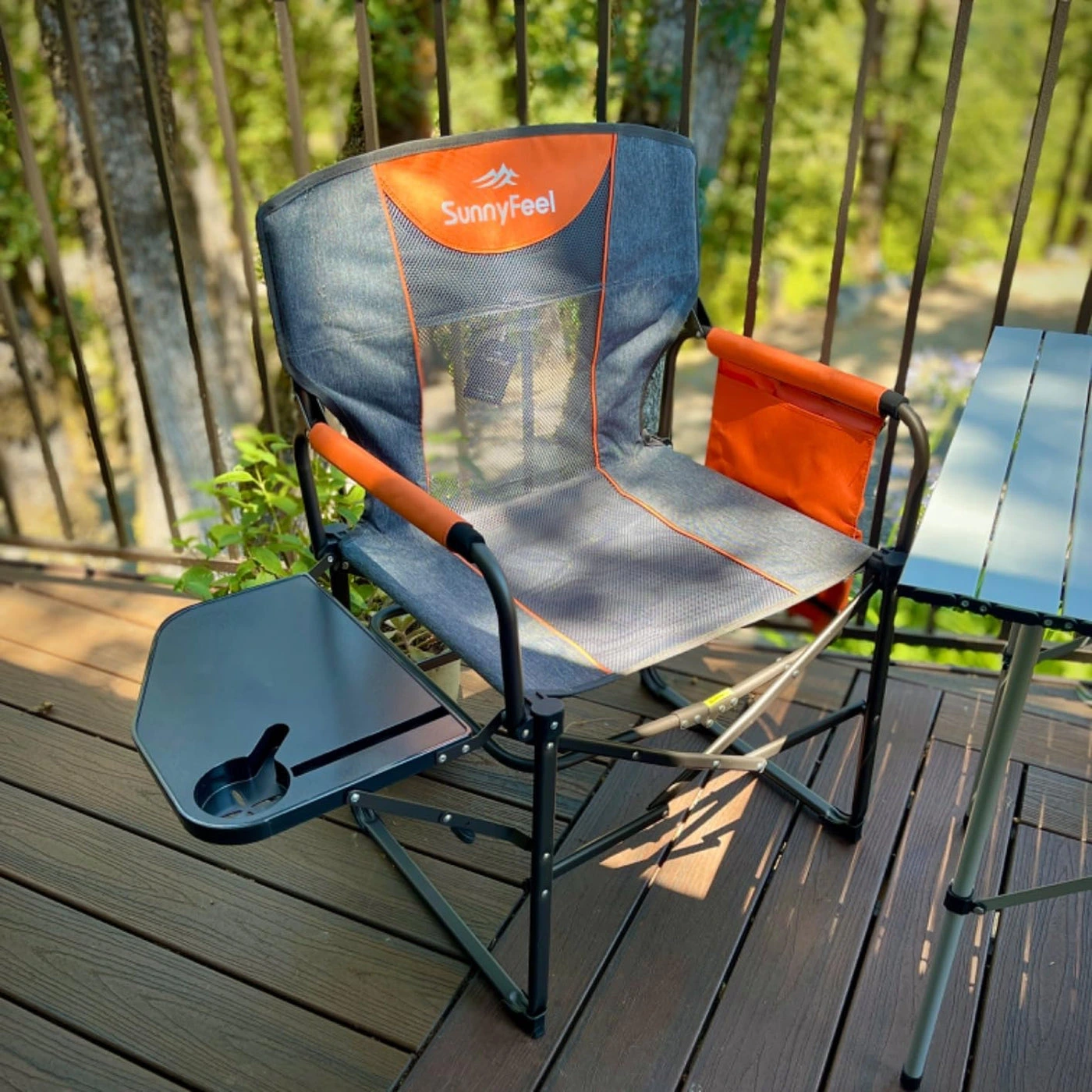
How to Choose the Right Camping Chair for Your Outdoor Adventures
The right camping chair depends on where you will use it, how far you need to carry it, and how much comfort and support you need. Learn how to compare weight, materials, capacity, portability, and practical features before buying.
How to Choose the Right Camping Chair for Your Outdoor Adventures
A camping chair can make a campsite, beach visit, fishing trip, or outdoor event more comfortable. However, different designs suit different activities. A lightweight chair that works well on a hiking trip may not provide the features you want for a long afternoon at a campsite.
Knowing which features matter most can help you choose a chair that fits your activities, transport arrangements, and budget.
1. Start With Where You Will Use the Chair
Your main activity should guide your decision.
Hiking and Backpacking
When you need to carry a chair over a distance, weight and packed size are important. Look for a design that fits comfortably with your other equipment and is practical to assemble at your destination.
Car Camping
If you can transport equipment in a vehicle, you may have more flexibility to choose a larger seat with additional padding or a higher backrest. Check that the folded chair fits in your vehicle alongside your other gear.
Beach Trips and Picnics
For beach outings, consider the chair's height, portability, and suitability for the surface. A lower seat may be comfortable for relaxing near the sand, while a taller design may be easier for some people to get in and out of.
Sporting Events and Outdoor Gatherings
If you will sit for several hours, consider back support, armrests, seat width, and ease of carrying. Also check any venue rules about chair size or permitted equipment.
2. Compare Weight and Packed Size
A chair's weight affects how easily you can transport it. However, the lightest option is not automatically the most suitable.
Before buying, check:
The chair's total weight.
Its folded or packed dimensions.
Whether a carry bag is included.
How easily it fits into your backpack, vehicle, or storage area.
Whether you can assemble and fold it without difficulty.
For backpacking, compact storage may be a priority. For car camping, a larger chair may be acceptable if it offers features you value.
3. Check Weight Capacity and Dimensions
Always compare the manufacturer's stated weight capacity with your requirements. Do not assume that every camping chair supports the same load.
Seat dimensions are equally important. A chair's width, seat height, and backrest size can influence how comfortable it feels.
Look Beyond the Weight Limit
A published capacity is one specification, not a complete measure of comfort or suitability. Also consider the chair's construction, stability, intended use, and the manufacturer's instructions.
Consider Getting In and Out
A low chair may be convenient for relaxing but harder for some people to rise from. A taller seat may be more practical for other users. Think about your needs rather than choosing based on appearance alone.
4. Understand Materials and Construction
Camping chairs commonly combine a frame with a fabric seat. Product descriptions may identify the frame material, fabric type, joints, and other structural components.
Frame Material
Compare the material and construction described by the manufacturer. Also consider the chair's weight, stated capacity, and intended use.
Seat Fabric
Look for information about fabric care, breathability, cleaning, and suitability for outdoor conditions. If the chair will regularly be exposed to sand, moisture, or dirt, check the manufacturer's care instructions.
Stability
Pay attention to the chair's base and how it is designed to sit on the surfaces where you plan to use it. A model intended for firm ground may not perform the same way on soft sand or uneven terrain.
5. Choose Comfort Features That Matter to You
Extra features can improve convenience, but they may add weight, size, or cost.
Consider whether you need:
Padded seating: For a softer sitting surface.
A high backrest: For additional upper-back support.
Armrests: For comfort and easier changes in sitting position.
A cup holder: For keeping a drink nearby.
A storage pocket: For small items.
A reclining mechanism: For changing your seating angle.
A rocking design: For relaxing on suitable ground.
Prioritise the features you will actually use. A simple chair may be more practical for carrying long distances, while a larger model may be preferable for stationary outdoor activities.
6. Think About Setup and Storage
A chair that is difficult to assemble can become inconvenient when you arrive at a campsite or event.
Read the product instructions and look for information about the folding mechanism, assembly steps, and storage bag. If you plan to use the chair frequently, consider how easily it can be packed away after each outing.
At home, store the chair according to the manufacturer's care instructions. Make sure it is dry before storing it if the instructions require this, and inspect the frame and fabric periodically for signs of wear.
7. Compare Prices With Practical Features
When comparing camping chairs, consider the overall value rather than focusing only on the price tag.
A useful comparison includes:
Feature | What to check |
|---|---|
Weight | Is it manageable for your intended activity? |
Packed size | Will it fit in your backpack or vehicle? |
Capacity | Does the stated limit meet your requirements? |
Comfort | Are the seat dimensions and backrest suitable? |
Materials | Are the frame and fabric details clearly described? |
Extras | Are storage pockets, cup holders, or reclining features useful? |
Warranty | What coverage and exclusions apply? |
Price | Does the chair offer the features you actually need? |
SunnyFeel is one brand with several outdoor seating styles, including lightweight backpacking chairs and larger camping chairs. Compare the specifications of individual models rather than assuming that all chairs from the same brand share the same features.
If you decide to shop with the brand, check the SunnyFeel Discount Code page for advertised promotions and review the terms before purchasing.
8. Avoid Common Camping Chair Buying Mistakes
A few simple mistakes can lead to an unsuitable purchase.
Choosing by appearance alone: Check dimensions, weight, capacity, and materials.
Ignoring transport needs: A comfortable chair may be impractical if it is too heavy to carry.
Overlooking the ground surface: Consider where you will set it up.
Assuming all chairs have the same capacity: Read the specifications for the exact model.
Paying for unused features: Prioritise the features that suit your activities.
Ignoring maintenance instructions: Follow the manufacturer's guidance to care for the chair.
Skipping warranty terms: Understand the applicable coverage before buying.
9. Use This Checklist Before You Buy
Before making your final decision, ask yourself:
Where will I use the chair most often?
How far will I need to carry it?
Does its packed size suit my transport and storage space?
Are the capacity and dimensions appropriate?
Are the materials and construction details clearly stated?
Will I use the comfort features included?
Have I compared the total price and warranty conditions?
Answering these questions makes it easier to narrow down your options without paying for features you do not need.
Conclusion
Choosing the right camping chair starts with understanding how you will use it. Consider portability for hiking, comfort for longer outings, suitable dimensions and capacity, and construction details that match your intended activities.
Compare individual models carefully, read the manufacturer's specifications, and choose a design that fits your routine. A little research before buying can help you find outdoor seating that is practical, comfortable, and suitable for your plans.