
How to Build a Hair Repair Routine for Damaged and Color-Treated Hair
Learn how to build a practical hair repair routine by considering cleansing, peptide treatments, conditioning, protection, porosity, chemical services, and your hair's specific needs.
Introduction
Damaged hair does not always need more products. A useful routine starts by identifying what is causing the problem and then choosing products that address cleansing, moisture, structural support, protection, or a combination of these needs.
Coloring, bleaching, heat styling, chemical treatments, environmental exposure, and repeated mechanical stress can all affect how hair behaves. A better routine therefore depends on understanding your hair's condition rather than automatically adding the strongest treatment available.
Start by Identifying the Type of Damage
Before choosing a repair product, think about what your hair has recently experienced. Bleached hair may need a different approach from hair that is mainly affected by heat, dryness, buildup, or frequent chemical services.
Look at how the hair feels and behaves after washing. Excessive dryness, roughness, breakage, tangling, dullness, or difficulty retaining moisture can all point toward different routine priorities.
Choose the Right Cleansing Step
Cleansing is the foundation of a hair routine. A clarifying shampoo can be useful when buildup is affecting how clean or manageable the hair feels, while a gentler regular cleanser may be more appropriate for normal wash days.
The key is not to clarify simply because a product is marketed as a deep cleanser. Consider whether your hair actually has buildup, excess product, mineral residue, or another reason to use a stronger cleansing step.
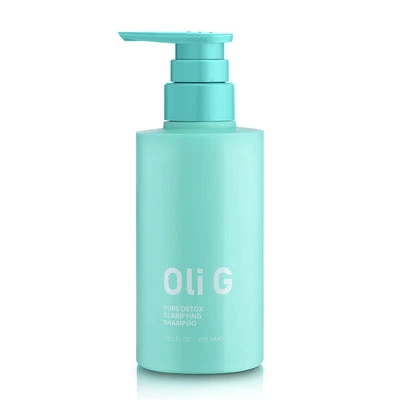
Oli G Club separates its Pure Detox Clarifying Shampoo from its Total Refresh pH Balancing Shampoo, reflecting the broader principle that a reset cleanser and a regular maintenance cleanser can have different roles.
Consider pH and Cuticle Management
Hair-care routines are not only about oils and conditioning. Product chemistry can influence how the cuticle behaves, which is one reason pH-balancing products appear in many professional hair routines.
A practical approach is to avoid constantly changing products and instead observe how your hair responds to a consistent routine. If the hair feels rough or difficult to manage after cleansing, reviewing the conditioning and balancing steps may be more useful than adding another unrelated treatment.
Oli G Club's educational material places particular emphasis on a multi-stage pH cycle as part of its system.
Use Repair Treatments According to Your Needs
A repair treatment should have a clear purpose in your routine. Leave-in treatments can be convenient for regular use, while masks or intensive treatments may be more suitable when the hair needs a deeper conditioning step.
For chemically treated hair, look for products specifically designed around the type of damage you are trying to manage. A product marketed for bond or peptide support may have a different role from a product designed primarily to add surface softness.
Oli G Club's Protect & Restore collection, for example, groups Atomic Hair Repair Leave-In Treatment, Chemical Addiction Peptide Bonding Spray, and Renew Porosity Balancing Oil around damaged, color-treated, and chemically processed hair.
Do Not Ignore Porosity
Porosity describes how readily hair takes in and retains moisture. It can influence how quickly products seem to disappear into the hair and how long softness or hydration lasts.
Highly porous hair may lose moisture quickly, while low-porosity hair can sometimes feel coated when too many heavy products are applied. Instead of assuming one routine works for everyone, pay attention to how your hair responds to water, conditioner, leave-in products, and styling products.
Build Around Your Hair Texture
Hair texture matters, but it should not be the only factor. Two people with the same curl pattern can have very different needs because of density, porosity, color history, heat use, chemical services, and styling habits.
For coily or tightly textured hair, moisture retention and protective styling may require particular attention. For fine hair, excessive conditioning or heavy oils can create a different problem by reducing volume.
Oli G Club currently publishes separate routine guidance for Type 4/coily hair and fine hair, illustrating why texture-specific routine planning can be useful.
Protect Hair Before Heat Styling
Heat styling can become a significant source of stress when used frequently or at high temperatures. A sensible routine should therefore consider protection before blow-drying, straightening, curling, or other heated styling.
Avoid treating heat protection as a replacement for sensible styling habits. Lower heat, fewer passes, appropriate tools, and adequate conditioning can all reduce unnecessary stress.
Oli G Club publishes educational material specifically addressing heat damage and its Chemical Addiction Peptide Bonding Spray.
Think About Your Chemical-Service History
If you regularly color, bleach, relax, straighten, or chemically process your hair, your routine should account for that history. A routine designed for untreated hair may not provide the same experience for heavily processed strands.
After a major chemical service, avoid immediately changing several products at once. Introducing products gradually makes it easier to identify what is actually helping and what may be unnecessary.
Oli G Club provides dedicated guidance for bleached, relaxed, keratin-treated, and color-treated hair, showing how a routine can be adjusted around service history.
Decide Whether You Need a Complete System
Buying every product in a range is not automatically better. A complete system can make sense when the products are designed to work together, but some shoppers may only need one or two steps.
Start with the biggest issue affecting your routine. If cleansing is the problem, focus there. If breakage or chemical damage is the main concern, prioritize a targeted repair step before expanding into additional products.
Oli G Club's own FAQ states that customers can start with one product rather than using the entire range, and identifies Atomic Hair Repair Leave-In Treatment as an entry product.
Compare Bundles With Individual Products
Bundles can be useful when you already know that you want multiple products. However, compare the bundle price with the individual products and make sure every included item has a role in your routine.
The current Oli G Club catalog includes the System Intro Kit, Total Refresh Duo, and Radiance Refresher Duo, so shoppers can compare complete or partial routines rather than purchasing every product separately.
If you are ready to shop after deciding what your hair needs, you can check the current Oli G Club Discount Code before checkout rather than assuming a discount applies automatically.
Common Haircare Shopping Mistakes
Buying Based Only on Hair Type
Hair type is useful, but it does not tell the entire story. Damage history, porosity, density, chemical treatments, and styling habits can change what a product needs to accomplish.
Using Too Many Treatments
More treatments do not necessarily mean better results. A simpler routine can make it easier to understand how your hair responds.
Ignoring Product Purpose
Read what each product is designed to do. A clarifying shampoo, conditioner, peptide treatment, oil, and heat-protection product can have very different roles.
Choosing a Large Kit Without a Plan
A large kit can provide value if you need the included products. If several products will sit unused, the apparent discount may not represent real savings for your routine.
A Practical Weekly Hair Routine
A simple routine can begin with a regular cleansing step followed by conditioning. Depending on buildup, hair condition, and styling habits, a clarifying treatment can be used when appropriate rather than automatically at every wash.
A targeted repair or leave-in product can then be added according to the condition of the hair. An intensive mask or treatment may have a place periodically when the hair needs additional conditioning.
Finally, protect the hair during styling and monitor how it responds over several weeks. Hair routines work better when they are adjusted based on actual results rather than changed every few days.
How to Evaluate Whether a Routine Is Working
Look for practical changes rather than relying only on marketing language. Easier detangling, improved manageability, less breakage, better moisture retention, or improved styling behavior can all help you evaluate whether your routine is useful.
Give a routine enough time to observe its effect, but do not continue using a product that causes obvious irritation or another negative reaction. If you have a persistent scalp or hair problem, professional advice may be more appropriate than changing products repeatedly.
Final Shopping Checklist
Before buying a hair repair product, ask:
- What problem am I trying to solve?
- Is the product designed for that problem?
- Does my hair have a history of coloring, bleaching, relaxing, or heat styling?
- Do I need a clarifying product or a regular cleanser?
- Would a leave-in, mask, conditioner, oil, or bonding treatment make more sense?
- Do I need one product or a complete routine?
- Is a bundle actually cheaper or more useful for my needs?
- What are the shipping and return conditions?
- Is there a current eligible promotion?
A thoughtful buying process can help prevent unnecessary purchases and make it easier to build a routine that matches your hair's actual needs.